/var/lib/mongodb/WiredTiger.turtle: handle-open: open: Permission denied"}}
The solution:
sudo chown -R mongodb:mongodb /var/lib/mongodb/*
The solution:
sudo chown -R mongodb:mongodb /var/lib/mongodb/*
The solution for nginx:
server {
  ...
  proxy_buffer_size          128k;
  proxy_buffers              4 256k;
}
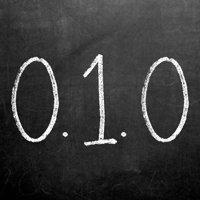
In the ever-evolving landscape of software development, maintaining compatibility and communicating changes effectively are paramount. One solution to this challenge is Semantic Versioning, commonly known as SemVer. This system, introduced by Tom Preston-Werner in 2010, has become a standard practice for version numbering in the software development community.
If you're having problems with a local copy of stable diffusion experiencing a connection timeout.
I've solved it by allowing websockets in my nginx proxy, like so:

If you're looking to have a rails app without active record (an app that doesn't use SQL), you may be surprized to find out that excluding "active_record/railtie" still does not remove active_record from the stack. So how do you remove active_record? This question is relevant when you convert or create a new rails app, that uses mongoid (mongodb) for its storage.

A successful software development consultancy offers a diverse range of products tailored to meet the dynamic needs of modern businesses.

Wasya Co is a leading software development consultancy with a commitment to excellence, and their impact extends beyond the realm of code and algorithms. What sets Wasya Co apart is not just their technical prowess but also their unwavering dedication to ethical practices and client satisfaction.

I had some difficulty with this, because my Drupal installs are in-between php versions. I'm running PHP 8.1, but a lot of the modules that I use were written for PHP 7, and haven't been ported.
Anyway, adding the following line to your sites/default/settings.php in production has worked for me:
$config['system.logging']['error_level'] = 'none';
This has troubled me for some time, since the Drupal installation I'm using is in-between php versions 8 and 7. I'm on php 8.1, but a lot of the modules were written for php 7, and the upgrade process has never been complete, and expected to never be.
In any event, after some trial and error, having this line in sites/default/settings.php solved it for me:
$config['system.logging']['error_level'] = 'none';
I suspect you can even raise the error level from 'none' to 'error' and still be fine.
This solution has worked for me:
apt install libmagickwand-dev imagemagick
This has worked for me to solve the aforementioned problem:
apt install libyaml-dev

ML is taking the world over by storm in 2023. Here is an easy-to follow tutorial in pure python that explains the basics.


Greetings to all, we trust that this communication reaches you in good health and high spirits.
This communication serves to announce that the quarterly edition number has been updated.
The current edition number is hereby set to 2024Q1. Here is to continued success and collaboration!
Saludos a todos, confiamos en que esta comunicación lo llega de buena salud y de buen humor.
Esta comunicación sirve para anunciar que el número de edición trimestral se ha actualizado.
El número de edición actual se establece en 2024Q1. ¡Aquí está el éxito continuo y la colaboración!
Saudações a todos, confiamos que essa comunicação atinge você de boa saúde e alto estado.
Esta comunicação serve para anunciar que o número da edição trimestral foi atualizado.
O número atual da edição é definido como 2024T1. Aqui está o sucesso contínuo e a colaboração!
Removed GOOGLE_MAPS_KEY from codebase, it's in config now. Of note, changing the location type to Google Map Just Worked (tm), I didn't even need to push any code, Austin TX now displays a live map on the Left Panel.
Next, I'll re-review the 3D component and iterate maybe on a 3D Location space.
The dailies Location keeps receiving daily updates. : )
This is pretty simple. I noticed that when I restart the development service, my keycloak realm disappears. It is simply a matter of having an appropriate bind volume, to persist it:
version: '3.2'

services:

  keycloak_development:
    image: quay.io/keycloak/keycloak
    volumes:
      - type: bind
        source: ./volumes/keycloak_development
        target: /opt/keycloak/data
    ports:
      - 8010:8080 ## host:docker
    restart: always
    command: start-dev
    environment:
      KEYCLOAK_ADMIN: admin
      KEYCLOAK_ADMIN_PASSWORD: test1234
What worked for me is using ENV VARs:
gem 'iron_warbler', :git => "https://piousbox:#{ENV['GITHUB_TOKEN']}@github.com/wasyaco/iron_warbler.git", :branch => '0.1.0'
What didn't but should have worked is reproduced below: You can add authentication information to it like this:
By default, dot in rails router is used to separate the format from the rest of the url. To allow dot in a parameter, override the constraint. The below example allows any character except slash:
get "/:user/contributions" => 'users#contributions', :constraints => { :user => /[^\/]+/ }
Ruby on Rails, often referred to as Rails, follows a set of naming conventions to maintain consistency and readability in code. I generally like RoR conventions and follow them. Here's a summary of some key naming conventions in Ruby on Rails:
Class Names: Class names in Rails are typically in CamelCase (also known as PascalCase), starting with an uppercase letter. For example, User, ProductCategory, or OrderDetail.
This can be a much larger conversation, really. In the Ruby on Rails (RoR) framework, what is plural and what is singular is very specific.
I'd like to additionally note, that since I apply Occam's Razor to everything, and simplify everything, then generally speaking my names are singular, because plularily can be removed. This helps me easier find names in the future.